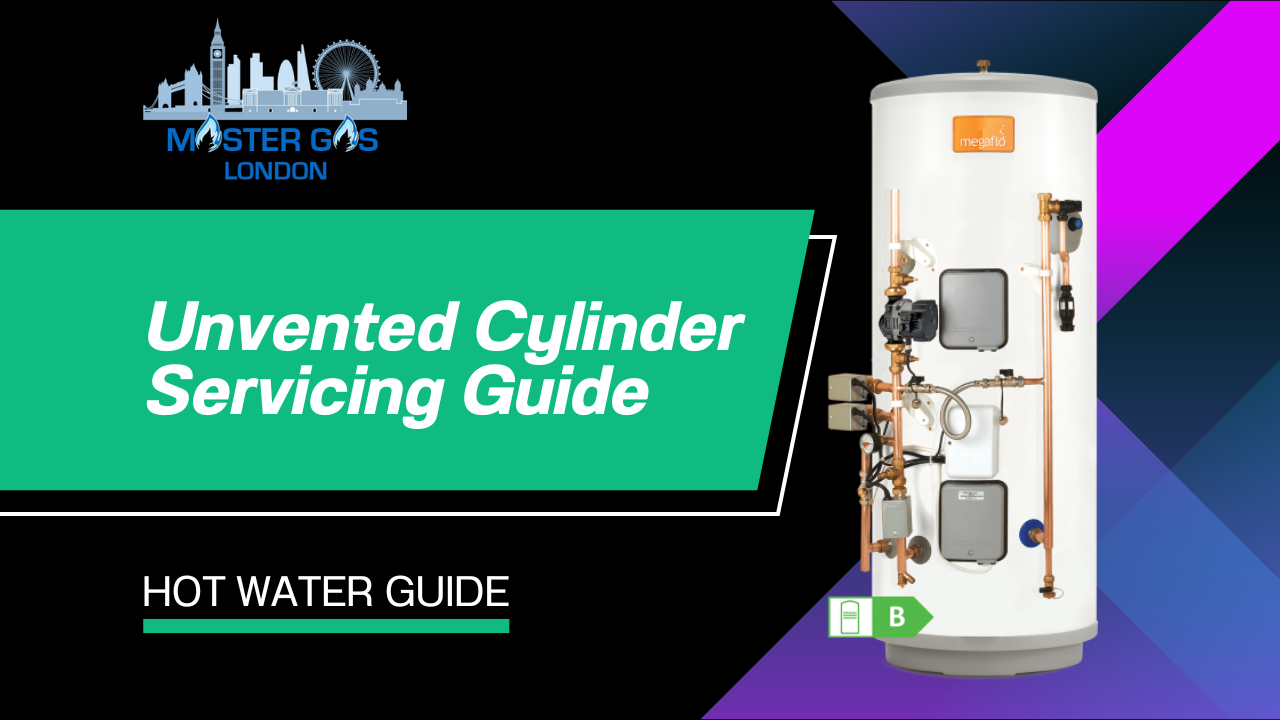
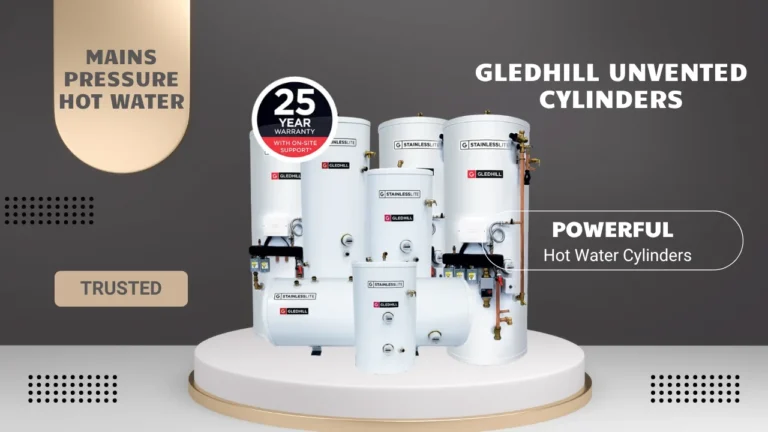
If you own an unvented hot water cylinder, understanding your unvented cylinder servicing requirements is not just about keeping the system running well. It is a legal and safety obligation. These systems operate under mains pressure, which means they contain components that must be inspected and tested regularly to remain safe and compliant.
Unvented cylinders are required to be serviced annually by a qualified engineer who holds a current G3 qualification. This is not optional. The G3 qualification is a specific competency under the Building Regulations, and only engineers certified to this standard are permitted to work on unvented hot water systems. Booking your unvented cylinder service in London with a G3-qualified engineer is the only way to ensure your service meets the required standard.
This guide covers what the annual service includes, which components are checked, what the regulations require, and what happens if servicing is skipped.
Unlike a standard vented hot water cylinder, an unvented system is connected directly to the mains water supply and operates under significantly higher pressure. That pressure advantage is what gives you strong, consistent hot water throughout the property. It also means the system depends on a set of safety devices to prevent dangerous pressure build-up, and those devices must be working correctly at all times.
Those safety devices are not passive. They degrade over time. Pressure relief valves can seize or weep. Temperature and pressure relief (TPR) valves can fail to operate correctly if never tested. Expansion vessels lose their charge. None of this is visible to the homeowner, which is precisely why a qualified engineer needs to inspect and test these components every year.
A poorly maintained unvented cylinder is not just an inconvenience. It is a pressurised vessel with compromised safety controls. Regular unvented cylinder maintenance exists to prevent that situation from developing.
Unvented hot water systems are governed by Part G of the Building Regulations, specifically Regulation G3. This legislation sets out the installation and ongoing maintenance requirements for any unvented system over 15 litres in capacity, which covers virtually every domestic cylinder in use. Understanding what a G3 unvented cylinder installation and ongoing servicing requires is important for every homeowner and landlord operating one of these systems.
| Requirement | Who it applies to | What is required |
|---|---|---|
| Installation notification | All properties | Must be notified to Building Control by a G3-qualified engineer |
| Safety devices | All properties | Specific safety controls must be fitted at installation |
| Annual servicing | All properties | Must be carried out by a G3-qualified engineer every 12 months |
| Service records | Landlords essential, homeowners strongly advised | Written record of each service should be retained |
| Manufacturer warranty | All properties | Annual servicing is required to keep the warranty valid |
Manufacturers also require annual servicing as a condition of warranty. If an unvented cylinder develops a fault and there is no evidence of regular servicing, the manufacturer’s warranty will almost certainly be voided. This is a significant financial exposure on a cylinder that may have cost £1,500 or more to install.

Premium cylinders installed from £1599
A properly conducted service covers a range of checks and tests across the system. The specific scope can vary slightly depending on the cylinder make, model, and age, but a thorough annual unvented cylinder service carried out by a G3 engineer should always include the following.
| Component | What is checked | Why it matters |
|---|---|---|
| Temperature and pressure relief (TPR) valve | Tested to confirm it lifts and reseats correctly | Primary safety device that must operate in the event of overheating |
| Expansion relief valve | Checked for correct operation and signs of weeping | Protects the system from excess pressure during heating cycles |
| Expansion vessel | Pre-charge pressure tested and recharged if required | Absorbs thermal expansion. Loss of charge causes pressure problems |
| Pressure reducing valve (PRV) | Outlet pressure verified against manufacturer specification | Regulates incoming mains pressure to the correct operating range |
| Motorised valve and thermostat | Operation and temperature settings checked | Controls heating cycle and prevents overheating |
| Discharge pipework | Inspected for correct fall, termination, and condition | Safety discharge must be able to operate freely and safely |
| Cylinder thermostat | Temperature verified, typically set between 60 and 65 degrees Celsius | Prevents Legionella growth and overheating |
| Overall system condition | Visual inspection of pipework, fittings, and connections | Identifies corrosion, leaks, or deterioration before they become failures |
The engineer should provide a written record of the service, noting the condition of each component and any remedial work carried out or recommended.
The expansion vessel is one of the most commonly found issues during unvented cylinder servicing, and it is worth understanding why. As your cylinder heats water, it expands by around four percent of its total volume. The expansion vessel absorbs this extra volume and maintains stable pressure throughout the heating cycle.
Over time, the diaphragm inside the expansion vessel can deteriorate or the pre-charge pressure can drop. When this happens, the expansion relief valve begins to discharge during every heating cycle. This is a small but persistent weeping that many homeowners mistake for a minor drip rather than a system fault. Left unaddressed, this constant cycling of the relief valve causes it to wear prematurely, often leading to a replacement valve being needed well before the end of its expected service life.
During a service, the engineer will test the pre-charge pressure and recharge the vessel if necessary. If the diaphragm has failed, the vessel will need replacing, and your engineer can advise on this at the time of the visit.
Neglecting unvented cylinder maintenance does not just risk voiding the manufacturer’s warranty. Over time, safety devices that have never been tested may fail to operate when actually needed. Expansion vessels that have lost their charge create pressure cycling that damages valves. Thermostats that have drifted out of calibration may allow the water temperature to drop below the threshold needed to suppress Legionella growth.
| What is skipped | What can go wrong | Potential consequence |
|---|---|---|
| TPR valve test | Valve seizes or fails to lift | No pressure relief in an overheating event |
| Expansion vessel check | Diaphragm fails, relief valve cycles constantly | Premature valve failure and pressure instability |
| Thermostat calibration | Temperature drops below safe threshold | Increased Legionella risk |
| Discharge pipe inspection | Pipe becomes blocked or incorrectly terminated | Safety discharge cannot operate correctly |
| Service record | No evidence of maintenance | Warranty voided and increased legal exposure for landlords |
If your cylinder has not been serviced recently and you have noticed the relief valve dripping, a loss of hot water pressure, or fluctuating water temperature, these are warning signs that should not be ignored. Our team can diagnose and resolve faults quickly. Find out more about our unvented cylinder repair service if you are concerned about the current condition of your system.
Yes. A brand-new unvented cylinder still requires its first annual unvented cylinder service within twelve months of installation. This is both a manufacturer requirement and a condition of regulatory compliance.
In practice, the first service is also a useful health check. It confirms the system was commissioned correctly, that all safety devices are operating as expected, and that no issues have developed in the first year of operation. Engineers carrying out a new unvented cylinder installation should make this clear at handover, along with providing the commissioning documentation and Building Control notification reference.
If you have had a cylinder installed recently and were not given any documentation or advised about annual servicing, it is worth following this up. Both your warranty and your compliance records depend on it.
Annually, without exception. Building Regulations and manufacturer warranties both require a service every twelve months. Some engineers recommend more frequent checks on older cylinders or in properties with hard water, where scale build-up can affect component performance more quickly.
Only a G3-qualified engineer is permitted to service an unvented hot water system. A G3 unvented cylinder service is a specific competency under Building Regulations, entirely separate from a standard Gas Safe registration. Always ask to see an engineer’s G3 qualification before allowing them to work on the system.
Servicing typically costs between £150 and £250 in London, depending on the engineer, the cylinder make and model, and whether any components need replacing during the visit. If the expansion vessel needs recharging or a valve requires replacement, this will usually be quoted separately.
No. Landlords have a legal duty to maintain hot water systems in a safe condition. An unvented cylinder that has not been serviced represents a potential health and safety risk, and the absence of a service record could increase legal exposure significantly if a fault causes harm to a tenant.
The most common warning signs include the relief valve dripping or discharging, fluctuating hot water pressure, water taking longer than usual to heat up, and unusual expansion noises during the heating cycle. Any of these should prompt a call to a G3 engineer rather than waiting for the next scheduled service.
A properly conducted service will include checking the cylinder thermostat is set to the correct temperature, typically between 60°C and 65°C, which is the primary domestic control measure for Legionella. Landlords with specific Legionella risk assessment requirements should discuss this with their engineer, as additional checks may be recommended depending on the property.
Understanding your unvented cylinder servicing requirements is straightforward once you know what the regulations demand. Annual servicing by a G3-qualified engineer, a written service record, and consistent unvented cylinder maintenance are the three things that keep a pressurised system safe and compliant.
For homeowners, it protects the warranty and ensures the system continues to perform as it should. For landlords, it is a compliance obligation with real legal and financial consequences if ignored. Either way, it is one of those commitments that costs far less to keep than to neglect.
If your cylinder is due a service or you have concerns about its current condition, get in touch with the Master Gas London team.

Get complete boiler cover from £12p/m

A-rated boilers installed from £1795

Book your boiler service for just £108

Boiler not working? We’ll fix it from £108

Premium cylinders installed from £1599

Free survey & quote for all ASHP installs
We use cookies to ensure our website works properly and to understand how visitors use our site. You can accept all cookies or manage your preferences at any time.